

Ganesha Cookstove Project: Over-The-Fire Backcountry Cooking Gets Lighter, Cleaner + Aides A Humanitarian Effort
While cooking over an open fire is nothing new, harnessing it in the way Brice Hoskin did as the founder of the Ganesha Cookstove Project was certainly unique. It was the first product to bring a number of common or known aspects together: a lightweight, portable and collapsible double-wall biofuel stove unit.
Gasification is the use of a double-wall stove to minimize smoke from a fire. This is used by a number of products, but none as small and collapsible as the Ganesha stove. Hoskin, an avid backpacker based in Crested Butte, Colorado, was tired of buying bottled fuel for cooking, and had already fuel for cooking, had already been working on a wood-burning backpacking stove when a disastrous earthquake struck Nepal in 2015. Having traveled there twice before and knowing how families depended on wood stoves to feed themselves, he saw an opportunity to help.
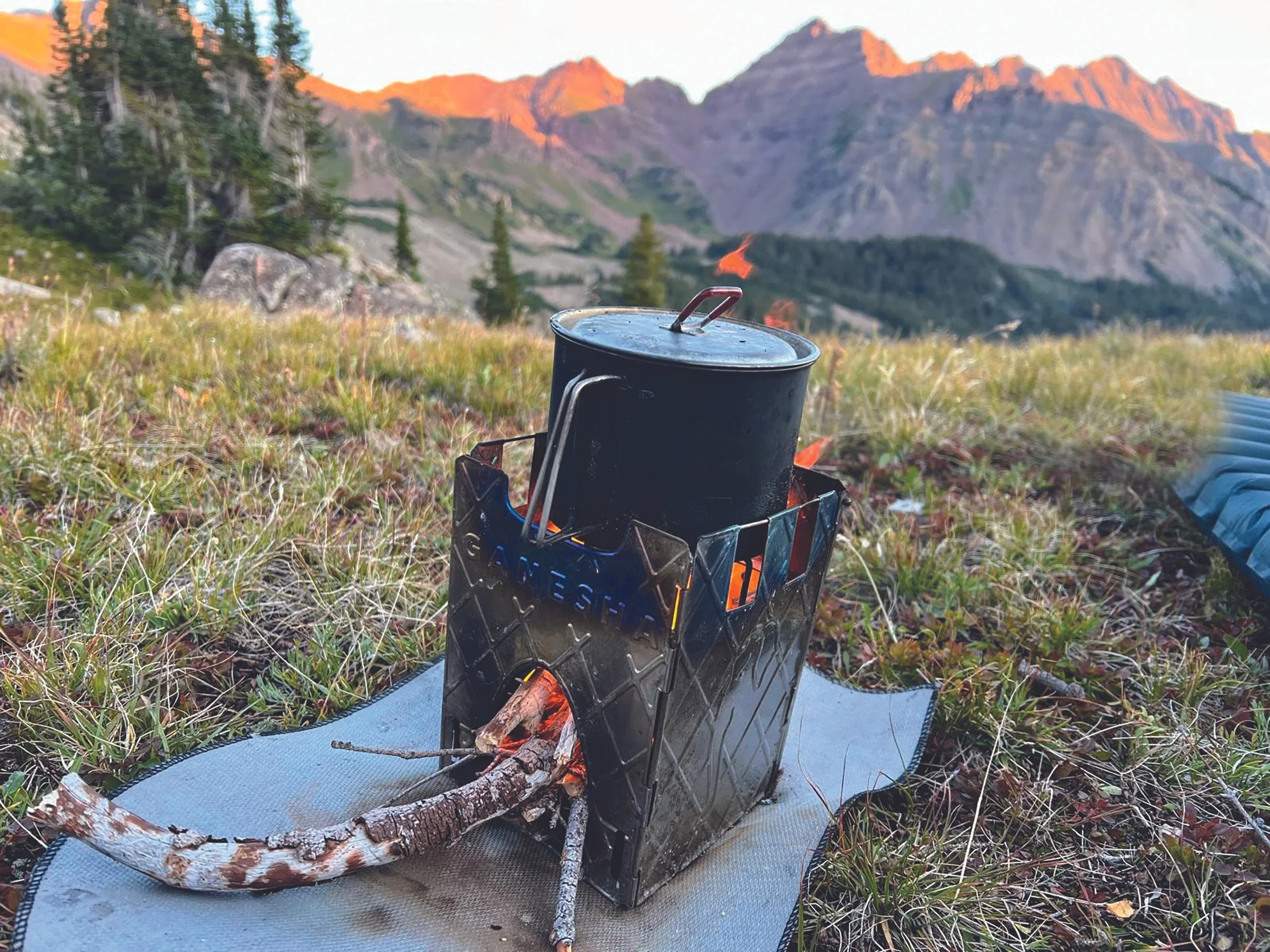
Photos courtesy of Ganesha Cookstove Project
”I had a working model and with the financial support of friends and family, I was able to assemble enough stoves to fill two bags and take them to Nepal,” Hoskin shares. “Then, with the incredible feedback from the Nepali women using the stoves, I improved the stoves and eventually distributed over 1,000 stoves.”
It was the reduction of the sooty smoke caused by an open fire compared to a double-walled stove that made the biggest difference for these families. It significantly improved the health of users, especially when cooking inside, because they had cleaner air to breathe while cooking meals.
Because these stoves are lightweight and pack flat, it’s easy to pack a bunch of them together for more efficient shipping. Conveniently — and quite deliberately — these are also qualities backpackers look for.
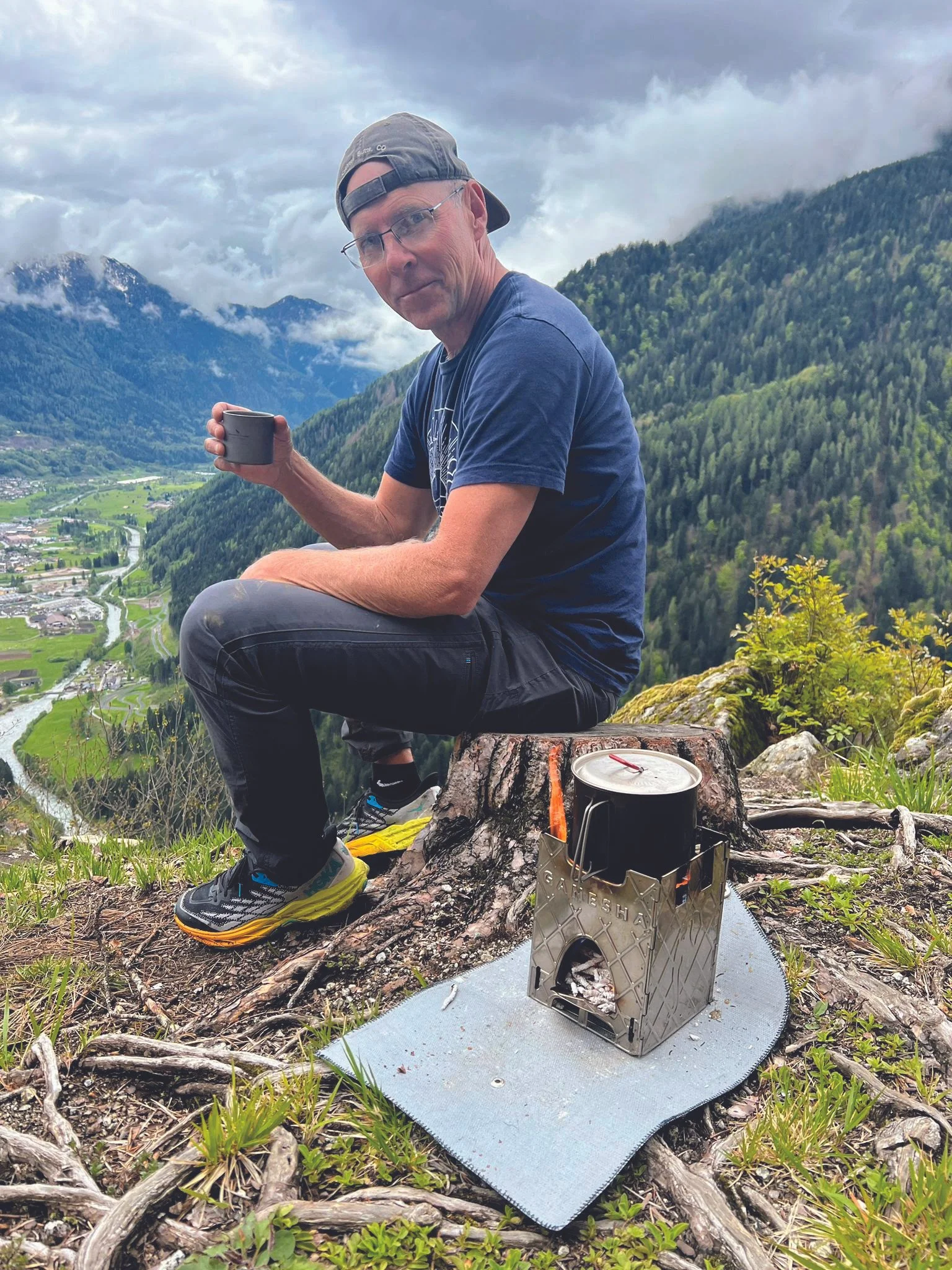
Brice Hoskin, founder of the Ganesha Stove Project
Testing the stove, it works as advertised for backpackers. It comes with a fireproof mat which serves double duty as a scorch barrier under the stove when it is in use and it wraps around the folded stove when stored to provide some containment and protection. The stove also comes with a polyethylene (Tyvek) pouch to contain the soot and some of the smell when carrying it in your pack. The smoky smell of the unit — after it has been used, but not while it’s in use — permeates into the other items in your pack and is probably the biggest unforeseen characteristic to be aware of.
If you’re not familiar with the “smokeless” moniker in wood-burning stoves today, it’s good to recognize there are a few conditions that need to be met for it to actually work that way. Dry and hot are the keys — wet or green wood will almost always smoke a lot and the fire needs to be burning super hot for the gasification process to function. And, with these in place the Ganesha stove had notably less smoke than an open fire.
The website claims a five-minute boil time for three cups of water. While this is certainly possible, it again depends on the condition of the fuel being used, the weather and how well the fire has been stoked to get it hot enough to do this.
After letting it cool off, the ashes and unburnt fuel can be dumped or buried. The stove folds down to about half an inch thick and tucks into the wrap and pouch, ready to slip into your pack. It comes in two versions: a 13-ounce, $80 stainless steel model and the 7.8-ounce, $140 titanium option.
Even if you’re backpacking somewhere that does not have the biomass lying around to burn, you can just bring an Esbit fuel tab or alcohol burner and use the Ganesha stove as a way to hold your pot above the flame.
Whatever your use case, the Ganesha cookstove will not only serve you when you need it but it will also support Hoskin as he continues to provide a cleaner cooking and living environment for others around the world — nearly three billion people cook over open fires to feed themselves.
Originally published in the winter 2025-26 issue of Spoke+Blossom.