

Ethnobotanical Garden Highlights Ute Culture + Plant Knowledge
Before they were forcibly relocated to reservations in the mid-to-late 1800s, the Ute people in Colorado traveled with the seasons through different ecosystems to gather plants for food, medicinal and other uses. The Ute Indians continue to reside in Western Colorado and eastern Utah.
20 years ago, Ute elders began collaborating with various federal land agencies and Colorado State University (CSU) Tri-River Area Extension to create the Clifford Duncan Ute Learning Garden on Orchard Mesa in Grand Junction.
Betsy Chapoose, director of cultural rights and protection for the Ute Indian Tribe, conceived the idea of a Ute Ethnobotany Project in 2009, an ongoing research and educational project that seeks to preserve the traditional plant knowledge of the Ute people. The Ute Learning Garden was created as a physical manifestation of the ethnobotany project.
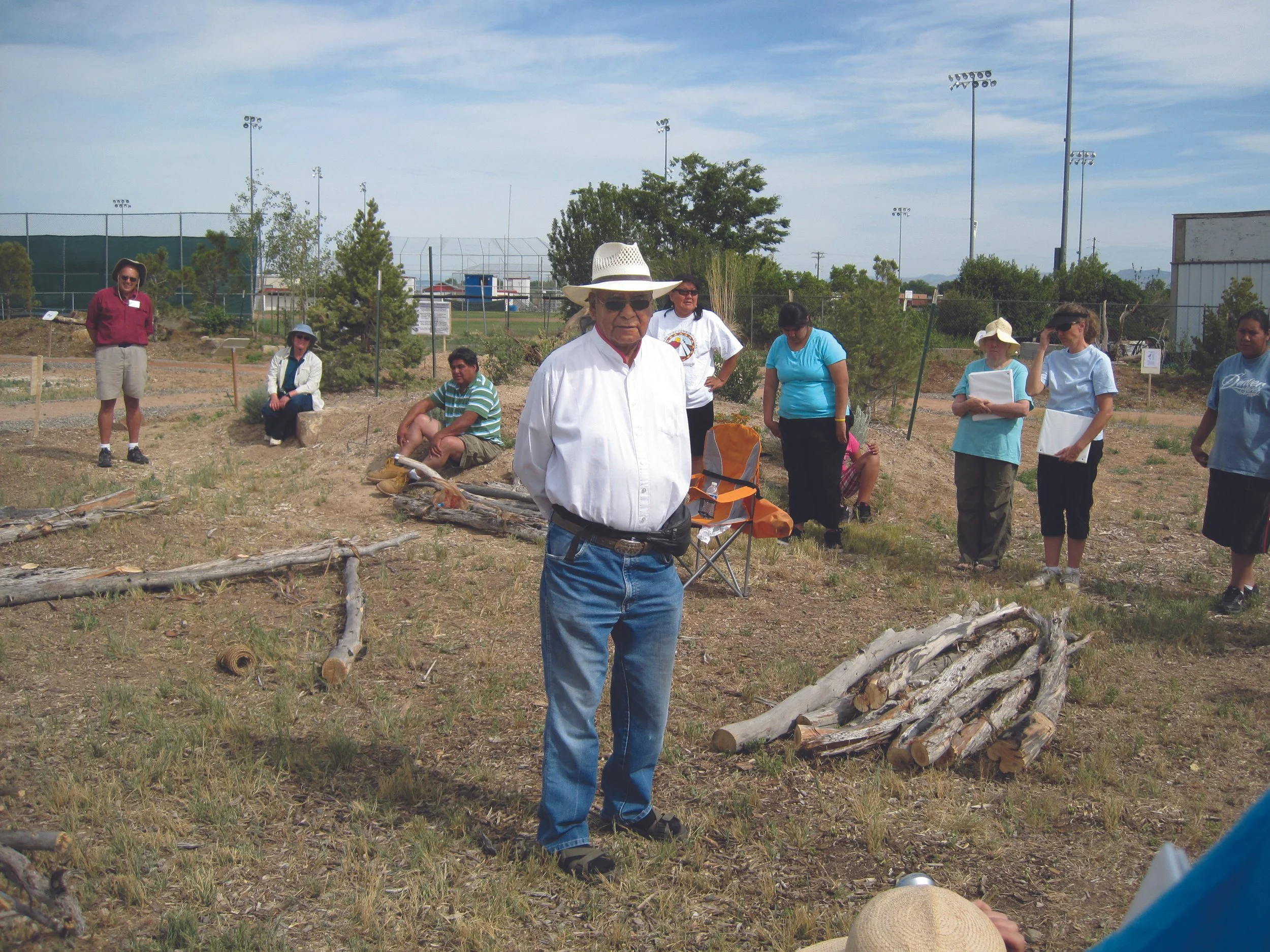
Photos courtesy of Clifford Duncan Ute Learning Garden
Ute elders and leaders began working with area archaeologists, the Bureau of Land Management, U.S. Forest Service and National Park Service to create a demonstration garden that teaches visitors about Ute customs, and how they used, and continue to use, native plants that grow in the region — for food, medicine, soap, shoes and other items.
The ethnobotany garden was planted in 2011 with the help of the Ute Indian Tribe of the Uintah and Ouray Reservation, Southern Ute Indian Tribe and Ute Mountain Ute Tribe. “We worked with all three tribes,” says Lauren Ratzloff, associate program coordinator for the Ute Learning Garden. “They helped us decide what plants to install here. Ute kids and elders helped with the planting.”
The garden takes visitors through three different life zones — desert, foothills and mountain — to reflect the seasonal rounds of the ancient Utes, who migrated with the seasons to access available animal and plant resources. Interpretive signs highlight important moments in Ute history and Ute-animal relationships.
Signage in front of a huge yucca plant explains how the yucca’s roots were pounded to make soap, and how the stringy fibers coming out of its sword-like leaves were used to make rope. In fact, CSU Extension employees are currently making rope from the yucca plant to use for a planned shade structure on the property, says Jeff Pieper, CSU Extension’s commercial horticulture and natural resource specialist. The yucca plant also contains edible flowers and fruits.
Prickly pear cactus grows in another area of the garden, a plant that provided the Utes with edible fruits, as well as pads for medicinal purposes. You’ll also see sagebrush — a plant that people continue to use for ceremonial and medicinal purposes.
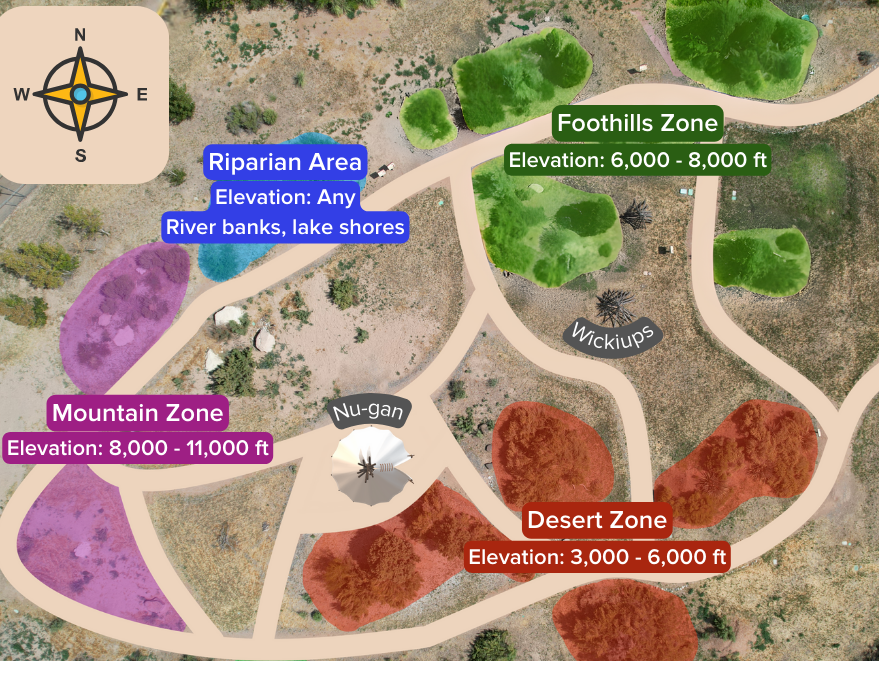
Additionally, the garden includes replicas of ancient Ute dwellings — primitive wood structures called wickiups — which archaeologists continue to find in remote areas of the Four Corners region. In the springtime, a nu-gan (the Ute word for teepee) is set up on the premises, where children gather for storytelling, and visitors learn the culturally significant way to enter and leave a nugan, says Pieper.
The ethnobotany garden is named for the late Clifford Duncan, a Ute elder and leader who played an important role in establishing the garden and adding the nugan and wickiup structures to the site.
The Clifford Duncan Ute Learning Garden draws approximately 300 to 400 visitors each year, says Ratzloff, who helps lead free tours of the garden. “We also talk about ecology in general, ‘Leave No Trace’ ethics and pollinators,” she says. “Kids really get it — even really young kids get how we can take care of the earth.”
The Ute Learning Garden is located at 2775 U.S. Hwy 50, behind the CSU Extension office on the west end of the Mesa County Fairgrounds. The site is open daily, and is free for the public to visit via a tour or on their own. Groups who call in advance can request a tour led by volunteer docents, many of whom are master gardeners.
For more information, visit tra.extension.colostate.edu/gardening-hort/ute-learning-garden.
Originally published in the spring 2026 issue of Spoke+Blossom.